
A civil wedding in Italy offers couples a legally binding yet beautifully simple way to say “I do” in one of the world’s most romantic settings. Performed by a mayor or authorized civil official, these ceremonies take place in government-approved venues such as historic town halls, palaces, villas, and even castles, combining legal formality with timeless charm. Short, elegant, and increasingly customizable, civil weddings have become a popular choice for both Italian and international couples seeking a meaningful ceremony without religious requirements—while still surrounded by Italy’s art, architecture, and breathtaking landscapes.
Questions about legal marriage in Italy

A civil wedding in Italy is a legally binding marriage performed by a civil authority—such as a mayor or authorized registrar. It takes place in a government-approved venue, like a town hall, historic palace, or licensed villa, and follows a short, formal structure that includes mandatory legal wording from the Italian Civil Code, the exchange of consent, and signing the marriage register. While the legal parts cannot be changed, some personalization (music, readings, symbolic vows) may be allowed. Civil marriages are fully recognized under Italian law and internationally.
Yes. Foreigners can legally get married in Italy through a civil or religious ceremony. However, they must meet the legal requirements, provide the necessary documents, and follow the local registration process. The marriage is legally recognized internationally.
A civil wedding in Italy itself is relatively affordable. The municipal fees for the legal ceremony typically range from about €300 to €1,000+, depending on the town, whether you’re a resident or not, and if you choose a special venue or weekend slot. However, in larger cities like Rome civil ceremony bookings (especially in historic rooms) can run around €1,200–€1,400. Additional costs include translations, document legalisation, and an interpreter if needed.
Civil weddings in Italy for locals

A civil wedding in Italy for local residents is a legally binding ceremony performed by a civil registrar (Ufficiale di Stato Civile) at the town hall (Comune) or at another venue authorized by the municipality. Before the ceremony, the couple must request the pubblicazioni di matrimonio (marriage banns), which are publicly posted for a set period—usually at least eight days—to allow any legal objections. Both partners must present valid identification, birth certificates, and proof of marital status. If either party was previously married, official divorce or death certificates must also be provided.
Once the banns period has passed with no objections, the couple can schedule the ceremony. Two adult witnesses are required, and the ceremony is conducted in Italian, following a standardized legal format. After the vows are exchanged, the marriage is immediately registered in the civil records, and the couple receives an official Italian marriage certificate. This civil union grants the same legal rights and responsibilities as any marriage in Italy, including matters of inheritance, taxation, and family law.
Civil wedding in Italy for foreigners

A civil wedding in Italy for foreigners is a legally recognized ceremony performed by a civil registrar (Ufficiale di Stato Civile) at a town hall (Comune) or at an officially approved venue. Couples do not need to be Italian residents to marry legally in Italy, but they must provide specific documentation proving they are free to marry. This typically includes valid passports, original birth certificates, and a Nulla Osta (Certificate of No Impediment) issued by their home country or embassy, stating that there are no legal obstacles to the marriage. All documents must usually be translated into Italian and legalized with an Apostille or consular authentication.
- Read more: Ultimate Guide to Winter Weddings
Once the paperwork is approved, the municipality schedules the ceremony. Two adult witnesses are required, and the ceremony is conducted in Italian. If the couple does not speak Italian, a sworn interpreter is often mandatory. After the vows are exchanged, the marriage is immediately registered in the Italian civil records. Then, an official Italian marriage certificate is issued. This certificate can later be legalized with an Apostille for recognition abroad. A civil marriage in Italy grants the same legal rights and status as any marriage performed in the country, making it fully valid internationally once properly registered.
Civil wedding in Italy requirements

A civil wedding in Italy is a legally binding ceremony performed by a civil registrar (Ufficiale di Stato Civile) at a town hall (Comune) or an officially authorized venue. The legal process is formal and document-based, so preparation is essential.
Required Documents for civil weddings in Italy
For Italian citizens:
- Valid ID or passport
- Birth certificate
- Certificate of marital status
- Marriage banns (pubblicazioni di matrimonio)
For foreigners:
- Valid passport
- Full birth certificate
- Certificate of No Impediment (Nulla Osta) or equivalent document from your home country or embassy
- Final divorce decree or death certificate (if previously married)
- All documents must be translated into Italian and often legalized with an Apostille
Legal Process & Ceremony
- Marriage banns are required for residents and must be publicly posted for a specific period (usually 8–11 days).
- The ceremony must be conducted by a civil registrar.
- Two adult witnesses (18+) with valid ID are mandatory.
- The ceremony is held in Italian; if the couple does not speak Italian, a sworn interpreter may be required.
- After the ceremony, the marriage is immediately registered, and an official Italian marriage certificate is issued.
- For international use, the certificate can be legalized with an Apostille.
Timeline Tip
Start the legal process at least 2–3 months in advance, especially if you are a foreigner, as document preparation, translations, and municipal approvals can take time.
Civil wedding venues Italy
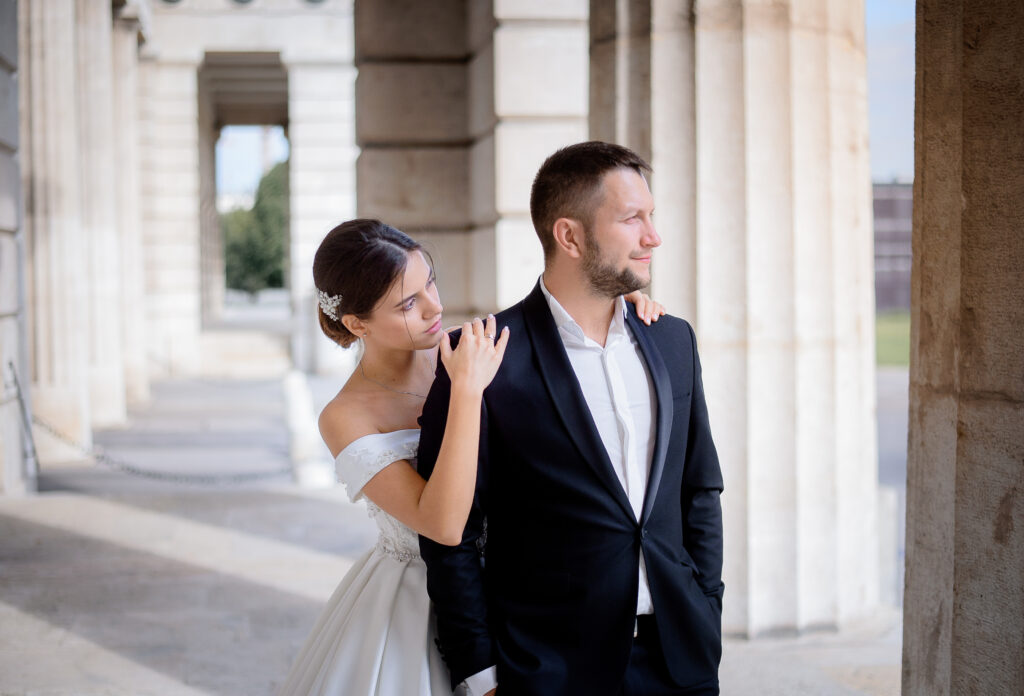
A civil wedding in Italy can legally take place at the local town hall (Comune), which is the most traditional and universally recognized venue. Every municipality has an Ufficio di Stato Civile where ceremonies are officiated by a civil registrar. Some town halls offer elegant ceremonial rooms, historic salons, or panoramic terraces, especially in well-known destinations. Fees, availability, and rules vary by city, and reservations must usually be made well in advance, particularly in popular areas.
In addition to town halls, many municipalities authorize civil weddings in alternative locations such as historic villas, castles, gardens, museums, and scenic outdoor terraces. These venues must be officially approved by the local government to be legally valid. This option is especially popular in regions like Tuscany, Lake Como, the Amalfi Coast, Rome, and Venice, where couples can combine legal formalities with breathtaking settings. These locations often involve additional rental fees and permits, but they offer a more personalized and visually stunning experience while remaining fully legal.
Civil wedding venues Sicily
Civil weddings in Sicily can be legally held at municipal town halls (Comuni) in historic cities such as Palermo, Taormina, Noto, Siracusa, and Cefalù, many of which offer elegant ceremonial rooms in centuries-old palaces or scenic terraces. These traditional venues provide a classic and fully legal setting, often surrounded by baroque architecture, medieval charm, or sea views.
In addition, many Sicilian municipalities authorize civil ceremonies in unique heritage locations such as castles, historic villas and countryside estates. These approved venues allow couples to combine legal formality with breathtaking scenery. It is an opportunity to create a wedding that is both officially recognized and visually unforgettable.
Civil wedding ceremony in Italy: what is it like?

A civil wedding ceremony in Italy is elegant, simple, and legally binding, officiated by a civil registrar rather than a religious authority. The ceremony usually takes place at a town hall or an officially authorized venue, such as a historic villa or palace. It is conducted in Italian and follows a standardized structure based on selected articles of the Italian Civil Code. The couple declares consent, may exchange rings, and signs the marriage register with their two witnesses.
The atmosphere can range from intimate and understated to grand and ceremonial, depending on the location. Some municipalities offer beautiful halls with frescoes, antique furniture, or scenic terraces overlooking the sea or countryside. While the legal format is consistent, couples often personalize the moment with music, readings, or symbolic gestures—subject to municipal rules. Once the ceremony is completed, the marriage is immediately legally valid. Then, the official Italian marriage certificate is issued, making it both a romantic and formally recognized union.
Civil wedding dress Italy: Brides

For a civil wedding in Italy, the bride and groom typically dress in a way that is elegant, refined, and suited to the setting. There is no strict dress code imposed by law, so couples have great freedom to express their personal style. Brides often choose chic, minimalist gowns, tea-length dresses, tailored suits, or soft, flowing silhouettes in silk, crepe, or lace. While white and ivory are still popular, many opt for blush, champagne, or even fashion-forward shades. Accessories tend to be understated but sophisticated, such as a short veil, headpiece, or elegant bouquet.
Civil wedding garments: Grooms
Grooms usually wear tailored suits in classic shades like navy, charcoal, beige, or light grey. In warmer regions or summer ceremonies, linen or lightweight wool suits are common, sometimes paired with loafers instead of traditional dress shoes. Ties and bow ties are optional, and many grooms choose an open-collar look for a relaxed yet polished feel. Overall, Italian civil wedding style leans toward timeless elegance rather than formal extravagance. It is effortlessly chic, well-tailored, and perfectly in harmony with the beauty of the surroundings.
Wedding planner in Sicily
Want to plan your civil wedding in Italy? Cassia Thomas is a renowned destination wedding planner specializing in refined celebrations across Europe. She blends elegance, cultural sensitivity, and meticulous attention to detail in every event. Cassia works closely with prestigious venues and top-tier vendors to deliver seamless experiences. Her expertise in international weddings, from legal processes to design, makes her a trusted guide for couples.